
Dentro il contemporaneo #2
UNDER-25 CHOREOGRAPHERS
October 11, 2026 17:00
PARC Performing Arts Research Centre Firenze | IT
as part of the Fabbrica Europa 2026 festival
Dentro il contemporaneo [Inside the Contemporary] is a project dedicated to choreographers under the age of 25, developed in collaboration with the Civica Scuola di Teatro Paolo Grassi and curated by Marinella Guatterini, dance critic and lecturer.
Over two evenings, seven performances created by six emerging choreographers who graduated from the Milan-based school in 2025 explore territories of beauty and experimentation, giving rise to distinctive artistic voices through movement, song, sound, and a precious sense of creative exuberance.
The project also includes critical reflections by Marinella Guatterini, opening a discussion on the contemporary in the performing arts and examining its languages, forms, tensions, and ongoing transformations.
This second evening features:
LORENZO DINO MARCHIONNI
QUANDO L’ACQUA DIVENTA GHIACCIO
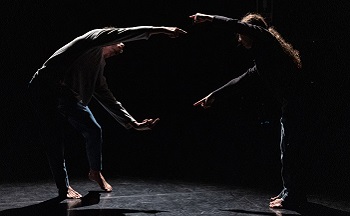
Quando l’acqua diventa ghiaccio [When water becomes ice] explores the full range of behaviors and attitudes we adopt in even the simplest situations of relating to another person. Moments of misunderstanding, of conflict, of dissonance and of the “unspoken” form the backdrop for a constant possibility of dialogue, where emotion emerges in its “atomic” form: microscopic, deeply concentrated, yet revealing an inevitable state of nakedness and innocence that permeates every individual.
Lorenzo Dino Marchionni, 23, studied acting before graduating from the Contemporary Dance programme at the Civica Scuola di Teatro Paolo Grassi, where he developed a particular interest in choreography. He was selected for the Incubatore per giovani Coreograf* programme at CIMD – Centro Internazionale Movimento Danza in Milan. Quando l’acqua diventa ghiaccio is his first original choreographic work.
concept and choreography: Lorenzo Dino Marchionni
performers: Arianna Delle Gemme, Elia Bucchieri
mentorship: Paola Bedoni
music: Bee Gees
photo: Denise Prandini
MARCELLO MALCHIODI
PROMETHEUS
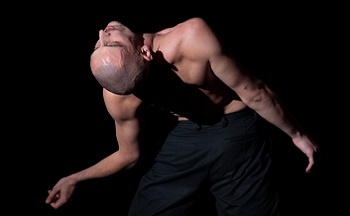
Have you ever wondered what you would do on the last day of your life? Everything returns to your mind: fragments, snapshots, echoes of what you once lived. You are approaching an ending that arrives against your will. You did not choose the moment. Someone else chose it for you.
How would that make you feel? This work is the second chapter of a trilogy exploring the many forms of madness.
The performance is freely inspired by Victor Hugo’s The Last Day of a Condemned Man, drawing on its psychological portrayal of the condemned person, an individual pushed to the margins and branded by society. An organized multitude judges, labels and punishes the individual’s deviations.
Marcello Malchiodi (2004) is a dancer, performer, and choreographer who graduated with honors from the Paolo Grassi Civic School of Theatre. In 2024, he created the solo work ICARUS. His second work, PROMETHEUS, was selected as a finalist for Anticorpi XL’s Vetrina eXtra 2026 and for Nuove Traiettorie. In 2026, he was awarded the Nuovo Grand Tour 4 grant, promoted by the Italian Ministry of Culture (MiC) and the Italian Cultural Institute in Paris.
choreography and performance: Marcello Malchiodi
dramaturg: Isaia Ragona Coco, Pasquale Renella
choreographic supervision: Paola Bedoni
music: David Moss, Demetrio Stratos, Meredith Monk, Engelbert Humperdinck
photo: Lorenzo Gorini, dettaglio
MARIA PRISCILLA CORNACCHIA
PODIÀFOS

We have always lived in an age where judgment is the standard by which everything is measured. But what happens when the body frees itself from this gaze? PodiÀfos stems from a choreographic exploration of the relationship between the body and electronic music. Through electro-pizzica and rave music, four dancers embark on a journey of rebirth, bringing to light what remains hidden.
Maria Priscilla Cornacchia is a dancer, performer, and choreographer. She holds a degree in Contemporary Dance from the Civica Scuola di Teatro Paolo Grassi in Milan and collaborates with artists in the contemporary arts scene. Her original works include Di Sabbia e di Terra and PodiÀfos, which explore the body as a space of memory.
concept and choreography: Maria Priscilla Cornacchia
performers: Alvise Gioli, Arianna Delle Gemme, Miriam Maso, Giorgia Atti
music: Go Dugong & Washé, An-i, Jean-Michel, Future Tradizioni, Sangennarobar & Marco Dalmaso
music samples: Federico Gravili and Santiago Malverde
lyrics: Maria Priscilla Cornacchia e Sveva Servodio
photo (detail): Lorenzo Gorini
MARCELLO MALCHIODI
ORIONE (PRIMO STUDIO)
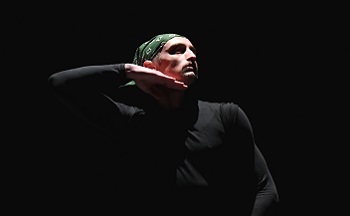
Orione is the third chapter of a trilogy dedicated to madness. In this new work, the focus shifts to a universal condition: madness is no longer confined to the individual but is reflected in the world that surrounds them. The body on stage is that of a distressed, disoriented being, struggling to survive in a devastated environment where every sense of balance has been irreversibly shattered. The performance stems from a reflection on the contemporary world and on the impact of human-made catastrophes — environmental, political, and social. Through an exploration of the myth of the same name and the existentialist philosophy of Jean-Paul Sartre, Orione sets a body in motion that no longer acts out of desire, but out of necessity, forced to adapt to an unstable and fragmented present.
by and with Marcello Malchiodi
dramaturg: Isaia Ragona Coco
choreographic supervision: Paola Bedoni
music: Gavin Bryars
production: Compagnia XE / Julie Ann Anzilotti
cover photo (detail): Denise Prandini
At Fabbrica Europa Dentro il contemporaneo is presented with the contribution of

INFO
TICKETS
15€ / 13€ * / 10€ **
* Over 65; Arci, Unicoop Firenze, Controradio Club, Touring Club Italiano, Institut français, Lungarno, IREOS, Centro Pecci Prato cardholders, holders of tickets for exhibitions and Amici di Palazzo Strozzi, Unifi staff and teachers
** University, Accademia delle Belle Arti, Conservatorio, IED, Polimoda students; students of schools with special agreements
Prices do not include presale fees and commissions.
PRESALE
online at ticketone.it
and at Boxoffice sale points