Salavisa European Dance Award finalists announced
Five finalists have been selected for the SEDA Salavisa European Dance Award which recognises artists from around the world for their talent and unique qualities in the field of dance.
Created in 2023 by the Calouste Gulbenkian Foundation and other European cultural institutions to honour the legacy of Portuguese dancer, teacher and artistic director Jorge Salavisa (1939-2020), this European dance award, worth €150,000, is granted every two years and hopes to establish itself as an incentive for artists with artistic maturity who do not fall within a strict age category and are still little known on the European circuit due to their artistic discourse or their social and cultural background.
Chiara Bersani (Italy), Dan Daw (Australia), Jefta van Dinther (the Netherlands/Sweden), Lukas Avendaño (Mexico) and Mamela Nyamza (South Africa) were selected by a Nomination Committee composed of one representative chosen by each of the nine European institutions that make up SEDA – Dansehallerne (Denmark), Fondazione Fabbrica Europa per le arti contemporanee ETS (Italy), Fundação Calouste Gulbenkian (Portugal), Joint Adventures (Germany), KVS (Belgium), Maison de la Danse/Biennale de la Danse (France), Mercat de les Flors (Spain), Sadler’s Wells (United Kingdom) and Tanzquartier Wien (Austria).
The work of the five finalists will now be evaluated by an independent jury, composed of three renowned dance experts – Ilgaz Gurur Ertem, La Ribot and River Lin.
The winner of the award will be announced in November 2026 during a ceremony at the Calouste Gulbenkian Foundation in Lisbon.
THE FIVE NOMINEES
Chiara Bersani
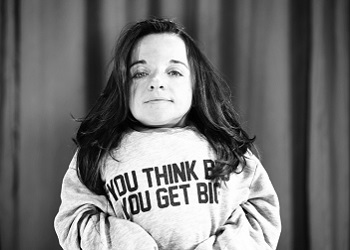
photo: Lorenza Daverio
Performing artist, activist and choreographer. She works on the accessibility of disabled artists in the performing arts scene, exploring the politics of the body and how the images we create interact with society’s narratives. She was one of the co-founders of Al.Di.Qua.Artists. Winner of several awards, she is co-curator of 2025/2026 season at Spazio Kor (Asti, Italy) and guest curator of the 2025 edition of the Bastards international performing arts festival (Trondheim, Norway). She is an associate artist of Triennale Milano Teatro 2025-2027.
Chiara Bersani’s choreographic practice is defined by radical precision, conceptual depth and political urgency. Her work proposes a profound reformulation of the relationship between body, time, vision and power, challenging the dominant aesthetics of virtuosity, speed and productivity, proposing instead a practice anchored in duration, attention and radical presence.
Dan Daw
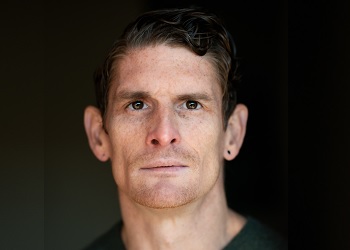
photo: Luke Stambouliah
Artist and producer. He began working as a performer with Restless Dance Theatre (AUS) in 2002. Throughout his career, he has worked with several international choreographers and companies. He is an Associate Artist of Sadlers Wells, London. Curator and co-curator of several festivals, he is the founder of Dan Daw Creative Projects, UK-based company disabled led company, leading the way in creating accessible international touring work that blurs the lines between theatre, dance and activism, alongside creating systemic change in institutions and the sector for d/Deaf and disabled artists and audiences through long-term partnerships and residencies.
Dan Daw has been recognised as an artist whose contribution to contemporary performance is transforming the field both structurally and aesthetically. His practice incorporates a rare combination of conceptual acuity, emotional intelligence and political necessity, expanding what representation, autonomy and intimacy can mean on stage. His artistic practice is inseparable from his activism: both insist on access, authorship, complexity, and dignity.
Jefta van Dinther
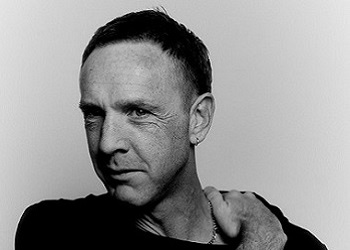
photo: Szymon Stępniak
Choreographer, dancer and teacher. Central in his work is the question of what it means to be human, examined through its relation to society, community and environment but also to other forms of life. Equally central in his current work is a deepening commitment to accessibility and diversity within the field of contemporary dance. He teaches choreography internationally at various centers and educational programmes. He served as a Senior Lecturer and Artistic Director in the MA programme in Choreography at Uniarts Stockholm. Since 2024, Van Dinther has been a member of the Advisory Board of HZT, Berlin, where he has been running the workspace DIORAMA since 2022.
Jefta van Dinther is considered one of the most visionary choreographers of his generation. His work addresses profound and universal questions – such as what it means to be human in relation to others, history and the world – and reveals how bodies are shaped by social, cultural and atmospheric forces. Presenting the human as simultaneously biological and relational, physical and psychological, he has developed a choreographic language in which the body is never alone. It moves within immersive constellations of light, sound, objects and materials that radically transform perception.
Lukas Avendaño

photo: Isa Sanz
Performing artist, choreographer, anthropologist, and writer. Having trained in Dance and Anthropology, his practice fuses dance, ritual, ethnography, and activism. His work draws on muxeidad – the Zapotec social and gender system that unsettles the colonial male/female binary and that has existed since before the arrival of Europeans in the Americas –, to stage charged explorations of sexuality, indigeneity, and power. He has presented work widely in Mexico and abroad. As an activist he addresses one of the most urgent crises in the Americas: the disappearance and murder of people, among whom his own brother.
His work emerges in a liminal space where dance becomes a technology of memory, survival (survivance) and collective imagination, with the potential to reshape how global contemporary dance understands ritual, identity and activism – offering new methodologies, imaginaries and possibilities for the future of the field.
Mamela Nyamza
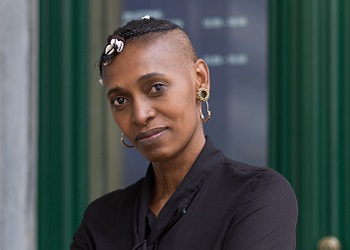
photo: Bea Borgers
Dancer, teacher, choreographer, and activist. Rejected by her classical Ballet Teachers because of her natural body structure, she was inevitably drawn to the politics of the body. She graduated from the Tshwane University of Technology with a National Diploma in Ballet, and continued her training at the Alvin Ailey International School for Dance in New York. Winner of several awards, she created a non-profit company MAMELA’s ARTISTIC MOVEMENT, which provides a creative home for those unemployed dance artists who have been marginalised due to body politics.
Exploring a practice rooted in feminism, decolonial critique, autobiographical research and an unwavering commitment to social justice, Mamela Nyamsa has been reshaping the African and international performance landscapes, demonstrating how movement can act as a catalyst for cultural and institutional transformation. The deconstruction of the Western dance canon is central to her work: Nyamza exposes the historical exclusions inscribed in its structures and reclaims space for historically marginalized black, queer, and female bodies.
ABOUT THE JURY
Ilgaz Gurur Ertem
As an interdisciplinary scholar, sociologist, curator, and educator in the field of somatic movement and dance, Ilgaz Gurur Ertem explores the intersections between the arts, social theory, and political thought. Her writings address contemporary dance and performance, cultural and curatorial politics, European artistic networks, and the intersections between social theory and bodily and embodied practices.
La Ribot
Choreographer, dancer and artist. Her work, which emerged at the end of Spain’s democratic transition in the 1980s, has profoundly changed the field of contemporary dance. She challenges the frameworks and formats of spaces, freely appropriating the vocabularies of theatre, the visual arts, performance, cinema and video in order to displace the conceptual landscape of choreography.
River Lin
Paris-based Taiwanese artist and curator, River Lin is dedicated to performance and works with live art, dance, and queer culture. His curatorial work focuses on community engagement, the production of intra-Asian knowledge, the creation of cultural infrastructures, and the queerisation of institutional agendas.